
Shop the best indoor drones for kids and adults, from caged hover toys to a palm-launched camera drone. What to look for and how to fly safely inside.
The best indoor drone for most families is the Bladez Toyz Mini Drone: small, guarded and cheap enough that crashes do not matter. For very young children, the Sky Viper Force Hover Sphere is safer still, as its cage keeps fingers away from the propellers. Adults who want indoor video should look at the DJI Neo.
Indoor flying is underrated in Ireland. When it is blowing a gale outside for weeks on end, a sitting room or school hall is often the only place a small drone can fly well.
What makes a good indoor drone
Propeller guards or a cage. Indoors you are always close to walls and people. Guards turn a crash into a bounce.
Small and light. A palm-sized drone needs less room to turn and does less damage when it hits something.
Altitude hold. Without it, the drone rises and falls with every twitch of the throttle. With it, beginners can concentrate on steering.
A slow speed setting. Indoor spaces are small. A beginner mode that limits speed makes learning far less chaotic.
Indoor drones and the rules
Most indoor drones are toys without cameras, so IAA registration does not come into it. If an indoor drone has a camera and is not marked as a toy for children under 14, treat it like any camera drone and register as an operator before flying it outdoors.
Our guide to toy versus camera drones explains where the line falls.
How to set up a room for flying
Move anything breakable, and close the doors so the drone cannot drift into another room. Turn off ceiling fans, which create powerful downdrafts. Keep pets and small children out of the flight area until the pilot has some control.
A large, empty space is ideal. Many parents book a school or community hall for an hour, which is a cheap way to give a new pilot room to learn.
Our five picks
1. Bladez Toyz Mini Drone: best overall
At 15cm across, with guards built into its arms and body, this little drone is made for living rooms. Headless mode means the stick always moves the drone in the same direction, whichever way it faces, which removes most of the frustration of learning.
It has three speed settings and comes with four spare rotors and a screwdriver, so a broken blade does not end the session.
DroneGuide.ie is reader-supported. When you buy through links on our site, we may earn an affiliate commission. As an Amazon Associate I earn from qualifying purchases. Learn more
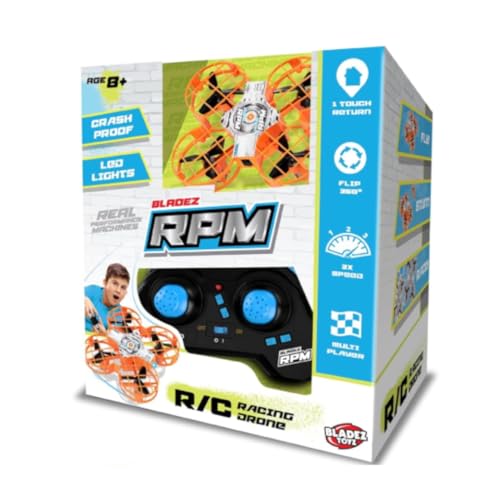
15cm, guarded, headless mode
A tough, cheap indoor trainer that teaches real stick control.
2. Sky Viper Force Hover Sphere: best for young children
A drone inside a cage, steered with hand gestures instead of a remote. Toss it up, hold your hand underneath and it moves away. Small children get the thrill of flying without needing to master two sticks.
The cage protects both the drone and small fingers. It has no camera, so there is nothing to register.
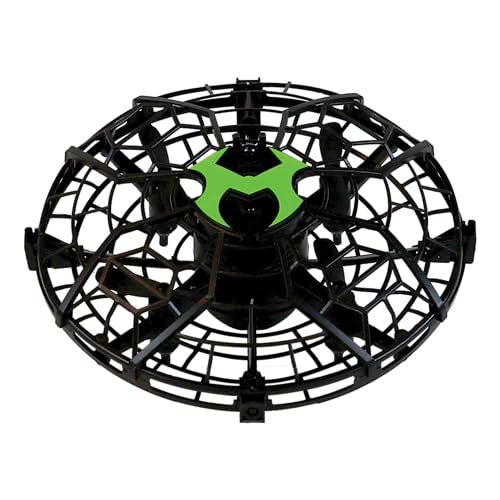
Caged, hand-controlled, no remote
The safest indoor flyer for small hands. All play, no learning curve.
3. Ameta Morpho: best for coding fans
The Morpho adds a 1080p camera and a coding module to a guarded indoor drone. Kids string commands together in the app and watch the drone carry them out, which makes it a handy rainy-day STEM project.
It has altitude hold and 32 RGB lights for a bit of theatre. Two batteries give up to 18 minutes in total. Check the box for toy marking, as the camera may mean a parent needs to register it.
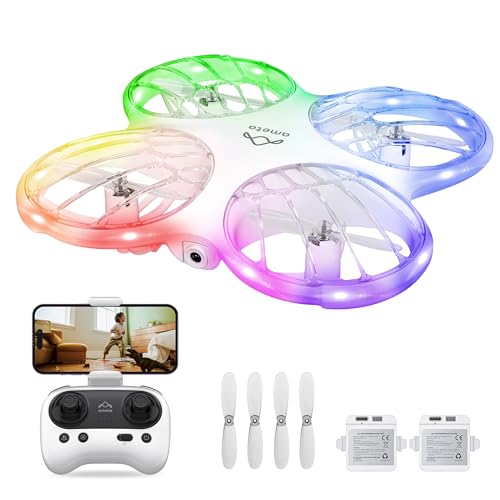
1080p camera, coding module, guards
A clever indoor drone that doubles as an introduction to programming.
4. Loolinn Mini Drone: best first camera drone indoors
A light, guarded drone with a camera you can angle by hand. Two batteries come in the box. It carries a C0 class mark and comes with a 24-month warranty from the seller.
It has no GPS, which does not matter indoors. Once a child can hover it steadily in a room, they are ready to try it outside on a calm day.
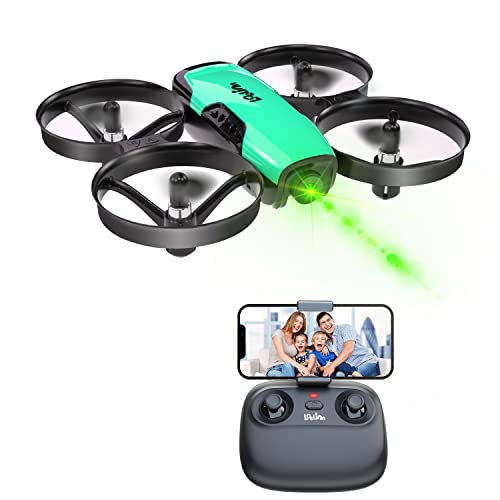
Prop guards, camera, two batteries
An easy way to try a camera drone indoors before taking it outside.
5. DJI Neo Fly More Combo: best for adults
The Neo is not a toy, but at 135g with guarded propellers it is happy indoors. It holds its position using downward sensors and launches from your palm.
DJI's Neo specifications put its Wi-Fi range at about 50 metres, more than enough for any room. It needs IAA operator registration because of its camera, as the IAA's registration FAQs explain.

135g, palm launch, remote and three batteries
A real camera drone that flies happily indoors, and grows with you outside.
Safety tips for flying inside
Keep faces away. Even guarded propellers can catch hair. Teach children to keep the drone below head height.
Watch the battery. Small drones drop quickly when the battery runs low. Land when the warning starts.
Charge with care. Charge lithium batteries on a hard surface where an adult can see them, and never overnight.
Buy safely. The Competition and Consumer Protection Commission's toy safety advice is to avoid any toy without a CE mark. Its recent product recalls show why.
Once the pilot is ready for outdoors, wind becomes the challenge. Met Éireann's wind records show why calm days are worth waiting for.
What is the best indoor drone for kids?
The Bladez Toyz Mini Drone for children from about eight, or the Sky Viper Force Hover Sphere for younger children.
Can you fly a DJI drone indoors?
The DJI Neo flies well indoors thanks to its guarded propellers and downward sensors. Larger DJI drones are better kept outside.
Do indoor drones need registering?
Not if they are toys or have no camera and weigh 250g or less. Camera drones that are not marked as toys need an IAA registration before flying outdoors.
Why does my indoor drone drift?
Without GPS, small drones are pushed by air currents from heaters and open doors. Altitude hold helps with height, but the pilot still corrects sideways drift.
Shopping by age? See the best drone for kids. For outdoor flying, start with the best drones for beginners, and check our drone rules in Ireland before the first flight outside.