
Toy drone or camera drone? Compare price, flying skills, durability and Irish registration rules, and find out which one to buy first.
A toy drone is a cheap, tough flyer built for play, usually without GPS and often without a camera. A camera drone is a flying camera, with GPS and stabilised video, and in Ireland it almost always means registering with the Irish Aviation Authority.
Buy a toy drone for a young child or a cautious first try. Buy a camera drone if you want footage and a drone you will still use next year.
The differences at a glance
| Toy drone | Camera drone | |
|---|---|---|
| Typical price | Under €80 | €120 and up |
| Main purpose | Play and learning | Photos and video |
| GPS hold | Rarely | Usually |
| Flight per battery | 5 to 10 minutes | 18 to 35 minutes |
| Wind handling | Poor | Fair to good |
| IAA registration | Not if legally a toy | Yes |
The legal difference
This is the part that surprises people. Whether a drone counts as a toy is not about its size or price.
Under Irish rules, a drone is a toy only if its packaging or documentation says it meets EU toy safety rules and is intended for children under 14. Genuine toys are exempt from registration.
Everything else follows the normal drone rules. Any drone with a camera needs its operator registered, and so does any drone over 250g. A palm-sized camera drone marketed at kids but without the toy marking is treated exactly like a DJI.
If the pilot is under 16, a parent registers instead. Our step-by-step registration guide explains how.
How they fly
Toy drones drift. Without GPS, they move with every draught and gust, and the pilot corrects constantly with the sticks. That makes them hard work outdoors, but it also builds real control skills fast.
Camera drones hold their position on their own. Let go of the sticks and they hover in place, which is why first-timers often find a good camera drone easier to fly than a cheap toy.
Most camera drones also fly themselves home if the battery runs low or the signal drops. Toys usually just land wherever they are.
How they survive crashes
Toy drones are built to crash. Light frames and cheap spare rotors mean a bump against the wall is part of the fun.
Camera drones are tougher than they look, but a crash can damage the gimbal or camera, and repairs are not cheap. Some, like the DJI Flip, add full propeller guards to soften the blow.
Two examples side by side
To make the difference concrete, here are two drones we recommend at either end of the scale.
The Bladez Toyz Mini Drone is a classic toy trainer. It is 15cm across, with guards around the arms and body. Three speed settings and a headless mode make steering simpler. There is no camera, so there is nothing to register.
DroneGuide.ie is reader-supported. When you buy through links on our site, we may earn an affiliate commission. As an Amazon Associate I earn from qualifying purchases. Learn more
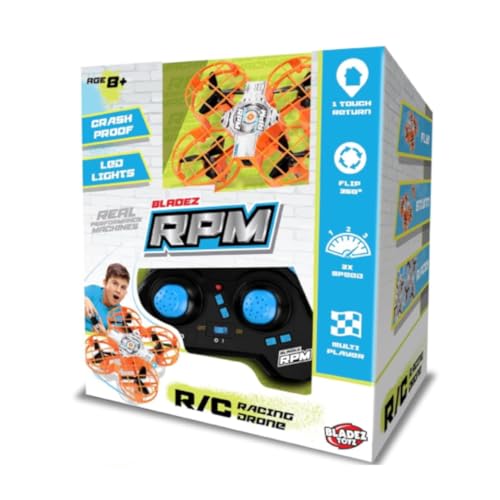
15cm, crash-resistant, no camera
A tough indoor trainer for children from about eight. Cheap to run and quick to master.
The DJI Neo Fly More Combo is the camera drone we recommend most often. It weighs 135g and records 4K video. It needs an operator registration because of its camera, but it holds its position and follows you on its own.
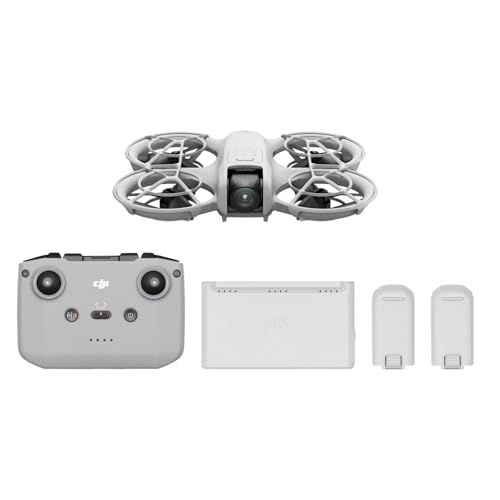
135g, 4K camera, remote and three batteries
The easiest proper camera drone to fly well, and the natural next step after a toy.
Which should you buy first?
Under eight: a toy drone, or a hand-controlled hover toy. Small children struggle with two-stick remotes, and a camera adds nothing for them.
Eight to 12: a toy drone for indoor practice, then a camera drone once they can hover steadily. The IAA's safety guidance sets no minimum flying age but advises following the manufacturer's age guidance.
Teens: a camera drone, with a parent registered as operator if they are under 16. Our teen drone guide has picks.
Adults: go straight to a camera drone. Modern GPS drones are easy enough that a toy stage is optional, and you will want the footage.
Weather matters in this decision too. Ireland is windy, and Met Éireann's figures show average annual wind speeds above 8 metres per second in the far north. Toy drones are close to useless outdoors on days like that, while a decent camera drone copes far better.
Check before you buy
Whichever you choose, look for the CE mark on the box. The Competition and Consumer Protection Commission's toy safety advice says plainly that toys without one should not be bought.
For camera drones, check whether the drone has a class mark such as C0. Under the EASA open category rules, a C0 drone under 250g flies in the lightest subcategory with no pilot exam. You still need to register if it has a camera, as the IAA's registration FAQs make clear.
Do toy drones need to be registered in Ireland?
Not if they are legally toys, meaning the packaging says they meet EU toy safety rules and are intended for children under 14. A drone with no camera that weighs 250g or less is also exempt.
Is a toy drone good practice before a camera drone?
Yes for children. It builds stick control without risking an expensive camera. Adults can usually skip it, because GPS camera drones are easier to fly than toys.
Can a toy drone have a camera?
Some do. If it is marked as a toy for under 14s, it is still exempt from registration. If not, the camera means its operator must register.
Why do toy drones drift so much?
Most have no GPS, so nothing holds them in place. Air currents push them around, and the pilot has to correct constantly.
Ready to choose? See the best drone for kids, sorted by age, or the best drones for beginners. For more indoor options, read the best indoor drones.